CJ’s Homelessness and Housing Insecurity
A Dog's JourneyCJ’s homelessness and housing insecurity are shown not as a single crisis but as recurring pressure that alters where she can sleep, how she seeks food and work, and which animals she can keep beside her. While travelling with Molly, she sleeps in a car and tries to find work; later, behind on rent, she decides to leave an apartment and asks a neighbor to care for Sneakers. These episodes make shelter precarious in practical, intimate terms: each change of place also rearranges the small routines through which CJ cares for her companions.
Life on the Road
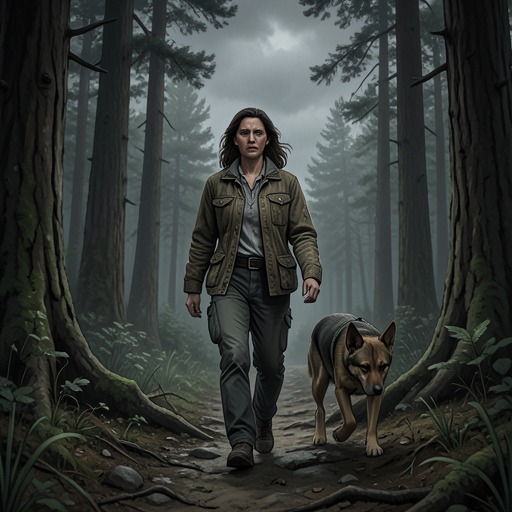
With Molly, CJ undertakes what the dog describes as the longest car ride she can remember. At night, CJ parks beneath a light and sleeps on the front seat, while Molly rests her head on CJ’s legs. The journey passes through a snowy place and then a windy, dry one. Once they arrive, the car remains their sleeping place for the next couple of days, making it both transport and temporary shelter rather than a route to settled accommodation.
Their days acquire a makeshift rhythm. CJ washes under flowing water and changes in a small building; they drive around, often toward restaurants, where she ties Molly in the shade before going inside. Molly observes the smells clinging to CJ’s hair and clothes by day’s end, while CJ takes her to the ocean to run and play but does not swim herself. The contrast is telling without requiring the episode to explain every hardship: the beach offers Molly room for pleasure, but CJ’s attention remains on finding work and managing the next day.
CJ tells Molly that getting even a minimum-wage job is harder than she expected. The difficulty is not presented through a detailed account of applications or rejection; instead, the dogs’ routines and the car-bound nights make the uncertainty visible. Food, washing, sleep, and the search for work all depend on improvisation. The car ride can still feel enjoyable to Molly, but that canine delight sits beside the conditions that make the journey necessary.
Seeking Help and Being Returned
At one point, CJ and Molly sit on a blanket on a sidewalk with a box. Passersby stop, leave something in it, and often speak to Molly; CJ thanks them. Molly enjoys the attention, while the scene also shows CJ relying on small public contributions. At sundown, she feeds Molly and says she has enough to get more food for her the next day. The immediate measure of security is modest: whether CJ can keep Molly fed through the following day.
When CJ notices something and starts away, a policeman runs after them. She falters and stops, and Molly licks her face, ready to run again. The officer explains that he appreciated the chance to sprint because he is training for a 10K, then asks why CJ ran. She says she does not want to go to jail. He reassures her that people are not jailed for running away from home, but says that because she is a minor and is in their system, she will have to come with them. The encounter draws a distinction between criminal punishment and institutional intervention, without removing CJ’s fear or her limited control over what happens next.
Rent Arrears and the Decision to Leave
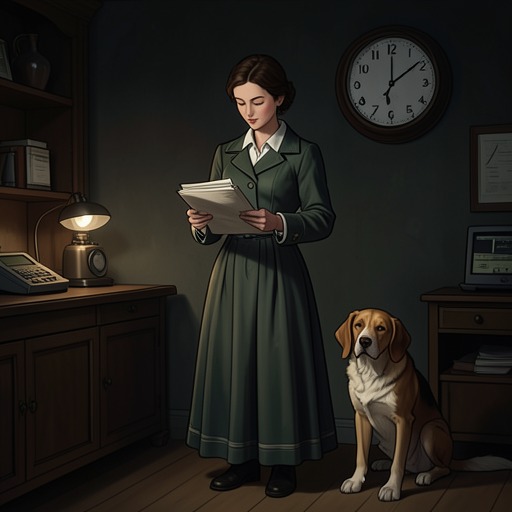
A later housing crisis takes place at an apartment CJ shares with Max and Sneakers. After a walk with the dogs, CJ finds a woman outside their door holding a piece of paper and posting notice. CJ asks what the notice means. The woman says CJ is far behind and asks whether she can pay anything toward rent that day. CJ cannot; she expects to be paid on Friday and thinks she might then manage most of a payment. The woman replies that by Friday another payment will be due, and says CJ must catch up or leave. She also explains that she has rent and bills of her own.
Max registers CJ’s fear and growls at the woman, whom he takes to be the source of CJ’s agitation. CJ folds a hand over his nose and tells him to hush, but he continues growling through it. The gesture turns the rent dispute into a moment of protective closeness: Max cannot resolve the arrears, yet he responds to the distress he senses. When the woman asks whether CJ has family she can turn to, CJ says her father died in a plane crash when she was little.
CJ decides to move rather than claim she can meet the demand. She thanks the woman for her patience, promises to pay what she owes, and says she is looking for a better job. The woman urges her to take care of herself, noting that CJ looks as if she has not eaten in a week. Once inside, CJ sits on the bed with the notice. When Max whimpers, she lifts him beside her and he climbs into her lap; he senses her sadness and fear. CJ whispers, “I’ve become my mother,” a brief statement that links the immediate threat of losing her home to a painful personal comparison, without spelling out that comparison further.
The Animals Left in Place
Packing makes the consequences of leaving concrete. CJ gathers her clothes into a suitcase and gives Max cheese; when Sneakers turns her nose up at her own food, CJ gives it to him instead. Max notices that the treats are offered with a cold, detached gloom, so that even food he would ordinarily welcome carries the weight of the moment. Care continues, but the familiar pleasure of feeding is altered by the impending move.
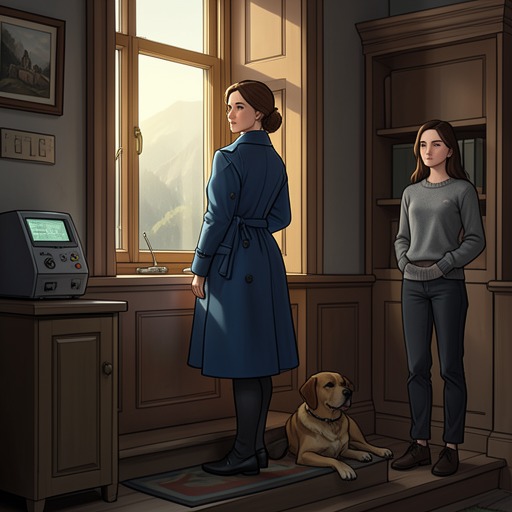
CJ takes Sneakers’s crate, toys, and bed next door to Mrs. Minnick. She explains that she has to move somewhere that will not take pets, and asks Mrs. Minnick to watch Sneakers “for a while” or perhaps always, adding that the cat is happy there. Mrs. Minnick accepts Sneakers, who is purring, and CJ leaves the crate inside the neighbor’s door. The arrangement preserves a home for Sneakers, but it separates her from CJ. Across both episodes, insecurity is measured not only by nights spent in a car or rent left unpaid, but by the choices those conditions impose on companionship: Molly travels with CJ, while Sneakers must stay behind.